
LEO Satellites: Revolutionizing Connectivity for Remote Oil Fields
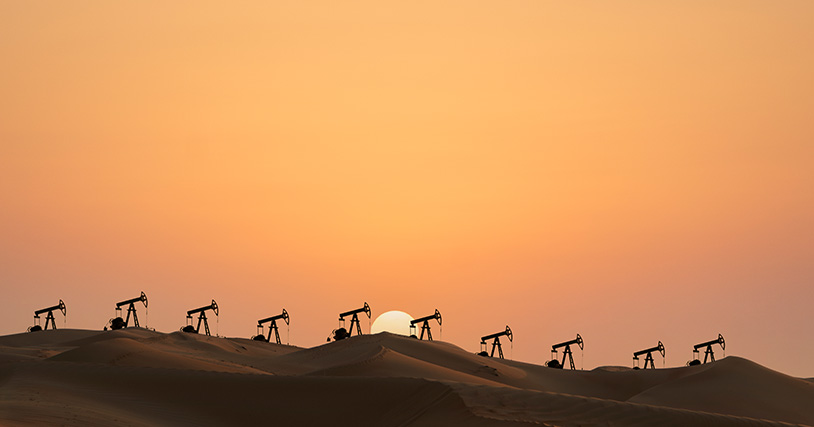
In the ever-evolving landscape of oil and gas, the pursuit of new resources often takes companies into the most isolated corners of the globe. From the frozen expanses of the Arctic tundra to the windswept deserts of the Middle East and the dense jungles of South America, remote oil fields are as challenging as they are essential. Yet, despite their significance, these remote operations have long faced a formidable obstacle: unreliable and limited connectivity. Traditional communications infrastructure, such as fiber or microwave links, is costly, slow to deploy, and often impractical in these inaccessible regions.
The advent of Low Earth Orbit (LEO) satellite constellations is transforming the oil and gas sector by delivering high-speed, low-latency internet connections to even the most hard-to-reach oilfields. This type of connectivity creates opportunities for real-time decision-making, enhanced safety, and operational efficiency.
The Connectivity Challenge in Remote Oil Fields
Oil and gas operations in remote areas have always contended with significant logistical and technical barriers. For drilling rigs stationed hundreds of miles from the nearest town or exploration teams navigating rugged, undeveloped terrain, reliable communications have traditionally been a luxury rather than a guarantee.
Conventional Geostationary (GEO) satellite services, come with inherent limitations. They orbit at an altitude of approximately 22,300 miles above the equator, introducing significant latency—often upwards of 600 milliseconds per round trip. This lag hampers applications that demand quick responsiveness, such as real-time video monitoring and conferencing, remote equipment monitoring, and automated control systems. With an explosion in the number of assets that need to be remote monitored, the data needs have grown beyond what GEO can handle.
Fiber optic infrastructure, while optimal for bandwidth and latency, is rarely feasible for remote installations due to the high costs and logistical headaches of laying cables across vast, inhospitable landscapes. Often LTE/4G is spotty, unreliable coverage or not available at all. As a result, oil and gas companies have long sought an agile, reliable, and scalable connectivity solution.
LEO Satellites: A Game-Changer
LEO satellites represent a fundamental shift in satellite communications. Unlike their GEO counterparts, LEO satellites operate at altitudes of 1,200 miles or less with 50-70 milliseconds—comparable to land-based broadband services.
Companies like Hughes are leveraging these new LEO constellations to provide high-speed, always-on internet to areas once considered unreachable. LEO satellites blanket the globe with overlapping coverage, ensuring redundancy and minimizing service disruptions. Their agility and scalability introduce a new era for remote oil and gas operations.
Business Benefits Enabled by LEO Satellite Connectivity
- Real-Time Monitoring: With low-latency and high-speed links, field sensors, cameras, and monitoring equipment can transmit data instantaneously to central control rooms or cloud platforms. This access enables predictive maintenance, immediate anomaly detection, and proactive interventions—reducing downtime and costly incidents.
- Safer Operations: Enhanced connectivity supports video surveillance, emergency communications, and even remote medical consultations. Workers are no longer isolated, and support teams can respond quickly to emerging risks or incidents.
- Faster Decision-Making: With reliable data streaming in real-time, decision-makers have the information they need to act swiftly. Whether it’s adjusting drilling parameters, managing supply chains, or responding to equipment failures, the ability to make faster, more informed decisions can make the difference between profit and loss.
- Seamless Integration with IoT and Automation: The digital oilfield is reliant on the Industrial Internet of Things (IIoT), where sensors, controls, and autonomous systems work together to optimize production. LEO satellites make it possible to operate these systems at peak performance, even in the most isolated outposts.
- Scalable and Flexible Deployments: Rapidly deployed and easily reconfigured, LEO satellite terminals can change as operational needs evolve. This ability is especially valuable for exploration and temporary sites, where connectivity must keep pace with shifting project requirements.
Looking Forward
As demand grows for energy resources in ever more remote locations, the need for robust, high-speed connectivity becomes paramount. LEO satellites are poised to meet this demand, breaking down barriers that have long constrained the oil and gas industry. As deployment accelerates and costs decrease, the vision of a truly connected, digital oilfield becomes a reality—driving safety, productivity, and sustainability to new heights.
LEO satellite connectivity is not just a technological advancement; it is a catalyst for transformation in the oil and gas sector. By bridging the digital divide in the harshest environments, companies like Hughes are helping the industry unlock new efficiencies, reduce risks, and position themselves for a more connected future. For remote oil fields, the sky is no longer the limit—thanks to LEO satellites, it’s the path to innovation. Begin your journey today.