


Many managed service providers still lead with product-focused solutions and technical specifications, highlighting the latest hardware or software without fully addressing what enterprise customers actually need. What matters most is a partner who understands the business challenges, provides clear and actionable guidance from day one, and supports solutions throughout their entire lifecycle.
Hughes takes a different approach to managed network services. We provide consistent behind-the-scenes support across any and all of the technologies our customers deploy. Our customer-first approach is grounded in service consultations, technological expertise, and authentic customer support. As enterprises navigate rapid and constant technology change, Hughes delivers a stable foundation that helps our customers move forward with confidence.
Benefits of Managed Services vs. In-House Support
The managed services versus in-house debate often centers on perceived cost savings.
Enterprise leaders might assume that managing networks internally will be less expensive than partnering with a managed services provider. In reality, technology is evolving faster than most organizations can reasonably keep pace with. Required skills are specialized, certifications require constant upkeep, and experienced network and security professionals are difficult to hire and retain. As a result, more enterprises are re‑evaluating how they support their networks. With in-house network management, network teams have less time to focus on strategic business initiatives. When problems occur, support teams must be prepared to diagnose and resolve issues quickly—across multiple technologies and environments. Building and sustaining that level of expertise internally carries real cost and complexity, often exceeding the perceived savings of an in‑house model.
Hughes invests in certified engineers who stay current as technologies evolve and manage networks on behalf of our customers every day. This model allows internal IT teams to focus on business priorities instead of network uptime, while avoiding the ongoing burden of recruiting, training, and maintaining highly specialized expertise in‑house.
What Sets Hughes Apart
Hughes begins working with customers before contracts are signed with discovery consultations. This early engagement is a key differentiator, particularly for large enterprise customers who require tailored solutions rather than off-the-shelf technology packages.
We work closely with customers to understand their business objectives, operating models, and the challenges that can impact performance. That insight shapes solution design from the start. Hughes invests upfront through experienced sales engineers and pilot engineers who validate proposed architectures in the lab, ensuring solutions are technically sound and aligned to real business needs before deployment.
This approach allows Hughes to focus first on the problems customers are trying to solve—and then design managed services that fit how their operations actually run. Just as important, we take responsibility beyond deployment. Hughes emphasizes full lifecycle support, staying engaged as technologies evolve and customer requirements change.
A Trusted Partner, Not Just Another Provider
Hughes brings together the people, processes, and operating discipline required to succeed at enterprise scale—validated by customer testimonials and long-term relationships. Our focus is not on short‑term transactions, but on earning trust through accountability and execution.
In complex enterprise environments, total cost of ownership is shaped by far more than initial pricing. Network changes, expansions, and escalations are inevitable as business needs evolve. Hughes approaches managed services with a commitment to clarity and transparency, ensuring customers understand how services are delivered and supported across the lifecycle. While engagement models continue to evolve, our underlying commitment to straightforward, predictable operations remains unchanged.
As enterprise customers work to effectively apply AI across their operations, Hughes has already incorporated AI technologies into managed network services in practical, operations‑focused ways. Rather than simply identifying issues, our AI‑enabled capabilities help automate triage, accelerate resolution, and reduce escalations—freeing teams to focus on higher‑value work instead of monitoring alarms or manually analyzing logs.
For example, Hughes Active Power Edge technology monitors for issues on connected devices and automatically performs remote power cycling when needed. Without this capability, organizations rely on on‑site staff or dispatch a technician just to restore service—adding time, cost, and disruption.
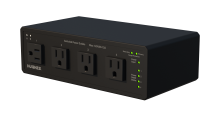
These capabilities are delivered through the HughesON portal, which provides real‑time insights, AI‑assisted operations, and expanded observability through APIs. Role‑based access ensures the right level of visibility for every audience—from engineers troubleshooting issues to executives reviewing performance through dashboards designed for leadership.
The Hughes Managed Services Advantage
Hughes Managed Services provides a consistent foundation across the technologies enterprises deploy—today and as requirements evolve. From discovery consultation through full lifecycle support, Hughes invests the time to understand each customer’s business and deliver solutions designed to work in real‑world operations.
As technology continues to evolve and specialized skills become harder to acquire and retain, this trusted partner model offers a compelling alternative to managing networks entirely in‑house. Hughes Managed Network Services combine deep expertise, proven operational infrastructure, and long‑term accountability—so enterprises can stay focused on running and growing their business.
Learn more about Hughes Managed Network Services.