
Smart Technology, Real Results: The Value of the Hughes Active Power Edge
This blog is part of the Behind the Scenes with Hughes Managed Services Series. Read the series.
Enterprise business leaders know that network reliability at the edge isn’t just a technical problem or an IT concern; it’s a business continuity issue that touches every location, every employee, every shift, and every customer interaction.
For distributed enterprises, when a network disruption occurs, the impact on productivity, customer experience, and ultimately the bottom line is unacceptable. If and when technology fails, the support teams can act before the outage impacts end users and customers. Consider retailers, restaurants, financial institutions, and other businesses managing dozens of remote locations with always-on systems that must be maintained and perform optimally to meet employee and customer needs.
Network issues happen, but when managing multiple sites across disparate locations, enterprises must have a plan or a partner to prevent performance issues from impacting productivity. A managed network services provider often reduces the burden on in-house technology support staff to keep network operations and businesses running. The difference between an average managed service provider and an exceptional one is the ability to shield employees and customers from network downtime, ensuring operations continue as usual while network issues are resolved.
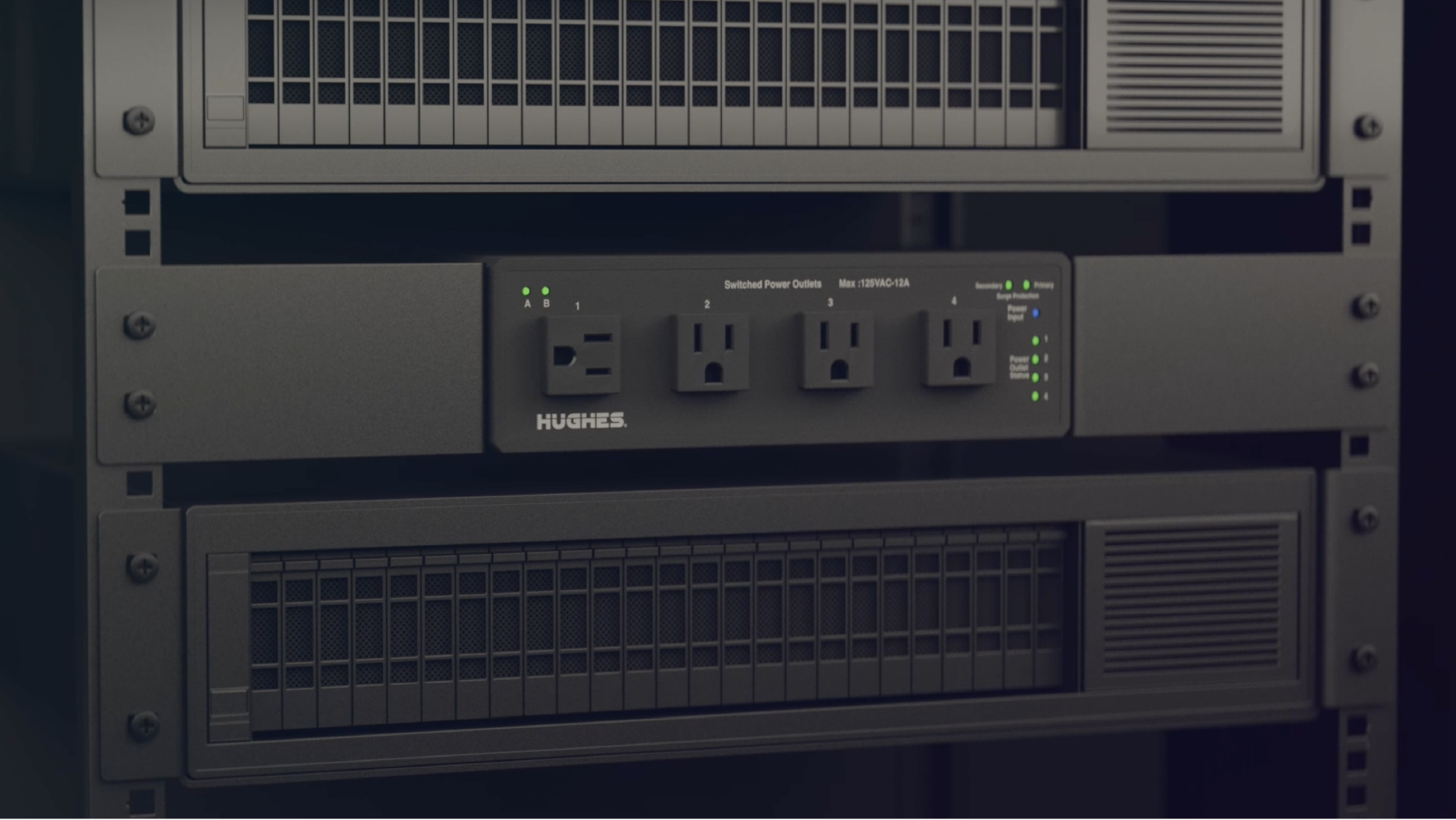
That is exactly the challenge Hughes addressed with its patented Active Power Edge technology.
Automatic Recovery, No Interruptions
At its core, the Hughes Active Power Edge detects when a remote device goes offline and automatically power-cycles the equipment. No support call or help desk ticket is necessary; the system knows what happened and resolves the issue.
The benefit is that employees are not distracted. Connectivity issues resolve themselves, and to a cashier or store manager, there is no indication that anything happened. Employees at remote distributed locations continue to do their jobs and serve customers without disruption.
Hughes Managed Services customers require, and deserve, this level of zero-touch remediation and uninterrupted service. A compelling example: in a single month, one Hughes customer saw support interactions with remote sites drop by 50%, avoiding 625 site calls or manual interventions.
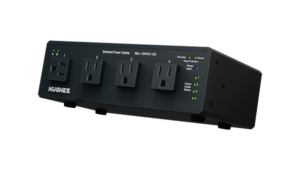
The system offers Hughes customers consistency and ease of configuration. Changes don’t have to be made location by location. Configurations can be pushed across an entire network at once, and because every device is connected to the broader Hughes managed services infrastructure, support teams have full visibility into what’s happening across every site in real time.
For IT teams managing distributed networks, the centralized control helps reduce major pain points, such as the time and coordination it takes to handle issues that vary across locations. With the Active Power Edge, IT teams get a consistent and immediate response to potential issues without having to be at every location.
From Reactive Response to Proactive Management
Hughes Managed Network Services enable customers to evolve their IT operations from a reactive response state to a more proactive approach to network monitoring and management, enabling more consistent network uptime.
The Active Power Edge continuously monitors remote sites and feeds telemetry into the Hughes managed services ecosystem, giving teams the visibility to identify patterns and address issues before they escalate. That data is integrated with Hughes artificial intelligence for IT operations (AIOps) and surfaced through the HughesON Portal, providing a unified view of network health across all locations.
Reactive response typically means the business has already been impacted. Waiting for something to break before fixing it is costly and disruptive. Preventing issues at one site matters—but preventing downtime across many distributed locations delivers exponentially greater value.
For customers, this can translate into a few critical areas they can begin to rely on:
- Fewer disruptions because problems are often caught and corrected before anyone notices them
- Greater transparency because every automated action is logged and visible in the portal
- Ongoing improvement as the Active Power Edge continues to evolve with new capabilities that extend the value of the system over time
Finding the Right Partner
Hughes differentiates its managed services by investing in the underlying technology that allows customers to scale with confidence while maintaining optimal operations. The Active Power Edge eliminates unnecessary manual intervention and automates what can be automated, keeping systems running so employees can stay focused on serving customers.
Through continued investment and technology evolution, Hughes operates as a trusted partner helping customers meet the demands of increasingly complex, distributed networks. As the Active Power Edge platform and unified management system expand with new capabilities, customers continue to realize greater value from the services and infrastructure they already have in place.
Learn more about Hughes Managed Network Services.
- Part 1: Beyond Product Features: The Hughes Managed Services Difference
- Part 2: The ROI of Managed Services: Why DIY Network Management Doesn’t Add Up in 2026
- Part 3: AI-Driven Network Management: How Hughes Delivers Proactive Support
- Part 5: One Portal, Every Perspective: Enhanced Visibility Across Your Managed Network
- Part 6: Security Meets Network: The Converged Advantage of Hughes Managed Services